Context
The Nimitz Carrier Strike Group was conducting pre-deployment exercises off the coast of Southern California. From about November 10, 2004, the USS Princeton's SPY-1 radar tracked groups of objects at 28,000 feet. They periodically descended to near sea level in under a second. An unheard-of performance.
The intercept
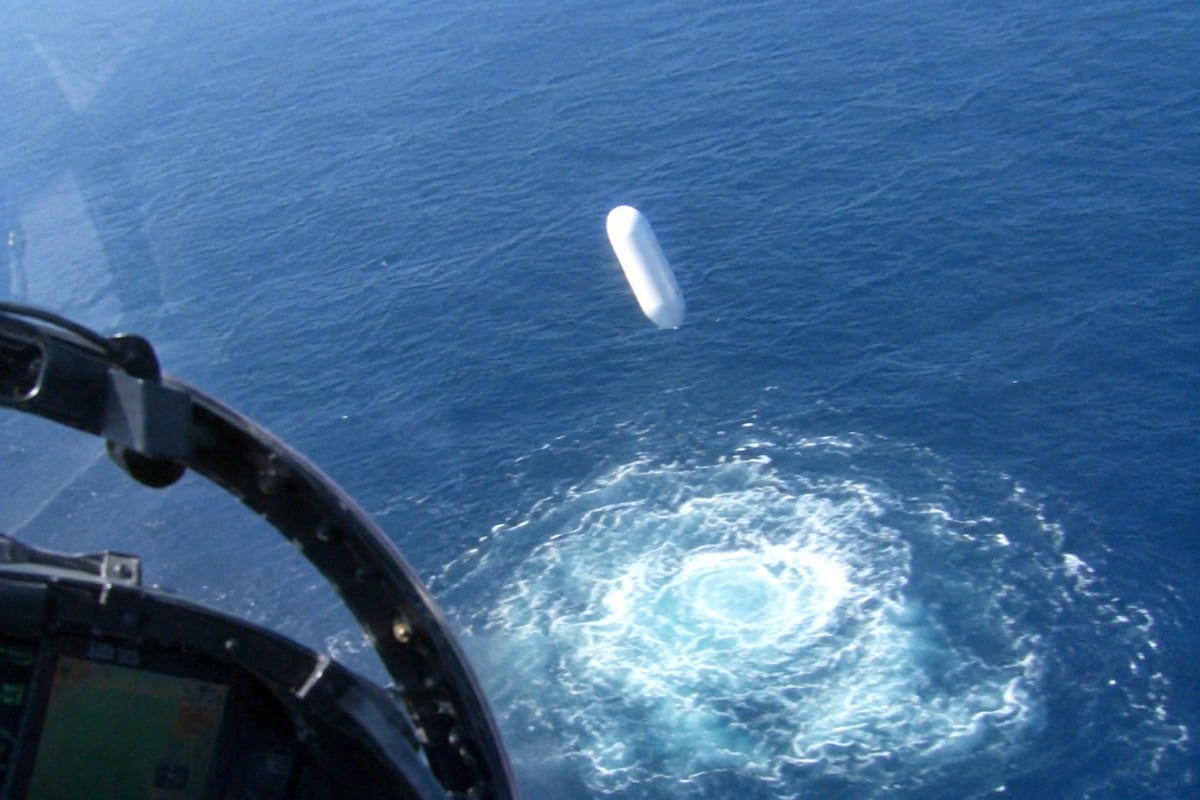
November 14. Fravor and Lt. Cmdr. Alex Dietrich, each with a weapons systems officer, were diverted from a training flight to investigate. Arriving at the location, they saw a disturbance on the sea surface. A roiling patch of whitewater, as they described it. Above it was a white, oblong object about 40 feet long, moving erratically. Fravor descended in a spiral toward it. The object rose and mirrored his path, then abruptly accelerated and vanished. Within seconds the Princeton reported it at the flight's original CAP point, some 60 miles away.
The video
A second flight, with Lt. Cmdr. Chad Underwood, was sent out and captured the object on the jet's AN/ASQ-228 ATFLIR pod. The 76-second 'FLIR1' clip shows a featureless white shape. At the end, it appears to accelerate off the left side of the frame.
Disclosure
The video and Fravor's account were published by the New York Times on December 16, 2017, alongside the revelation of the Pentagon's Advanced Aerospace Threat Identification Program (AATIP). The Department of Defense formally released FLIR1 and two other videos in April 2020, stating they were authentic and that the phenomena remained 'unidentified'. The 2021 ODNI preliminary assessment on UAP and the creation of AARO followed.
Explanations and debate
Skeptics argue the FLIR1 video is consistent with a distant conventional aircraft, and that the apparent acceleration is a camera zoom and pan artefact. They also note that the video was not shot during Fravor's encounter. The visual account, radar tracks, and sea-surface disturbance depend on witness testimony, which supporters consider unusually credible given the witnesses' training. The case is the primary example of modern military UAP reporting.

Comments (0)
No comments yet.